
Recently, the "Operation and Maintenance Management Measures for the Refined Oil Circulation Smart Regulatory Platform of Shanxi Province" was officially implemented. This management document, covering all gas stations connected to the platform across the province, not only clarifies the operation and maintenance (O&M) standards and data requirements of the provincial smart regulatory platform, but also imposes rigid constraints on the full-lifecycle measurement management of fuel dispensers. It aims to strictly crack down on illegal acts such as the unauthorized modification of control mainboards, the installation of cheating chips, and the destruction of seals, incorporating data timeliness and authenticity into routine regulatory assessments.
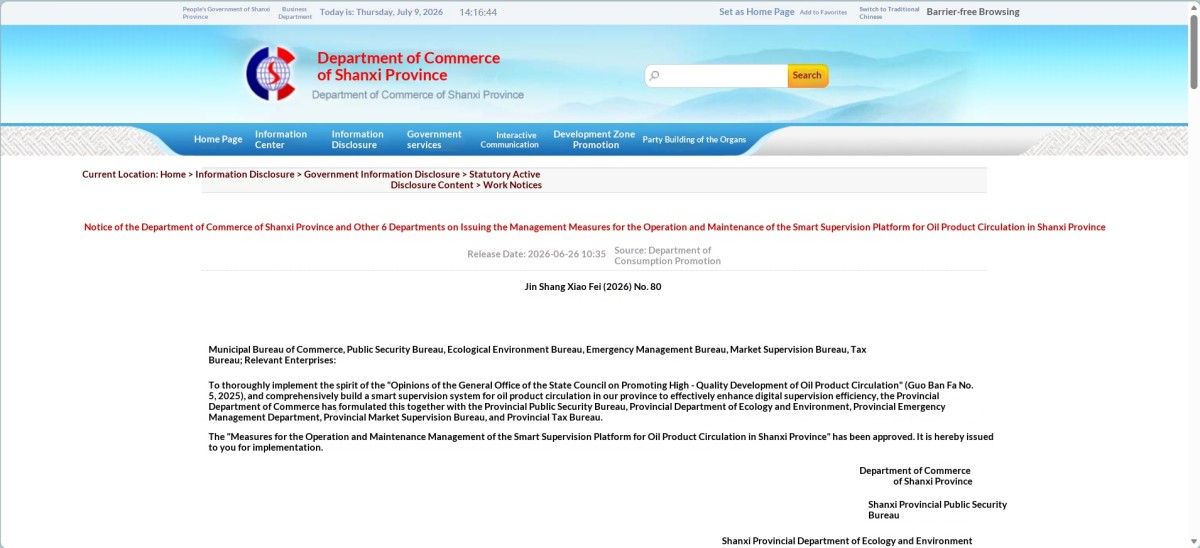
As national refined oil circulation supervision shifts towards digitalization and intelligence, various regions have successively introduced supporting systems for smart regulation. As the core equipment of refined oil circulation terminals, the anti-fraud capability of fuel dispensers directly determines the underlying reliability of the entire regulatory system. Traditional physical seals are no longer able to meet the regulatory requirements under this new landscape. Smart seals for fuel dispensers, centered on RFID (Radio Frequency Identification) technology, are rapidly becoming the core solution for regions to implement smart regulatory policies and fix the shortcomings in measurement supervision.
Traditional Seals Fail to Bear the Regulatory Weight: Five Major Pain Points Restrict Industry Compliance
Measurement seals serve as the first physical line of defense against fuel dispenser fraud and are the core tool for regulatory authorities to control measurement accuracy. However, under the current regulatory demands of "real-time monitoring, standardized management, and full traceability," the shortcomings of traditional physical seals, which have been used for years, are becoming increasingly prominent.
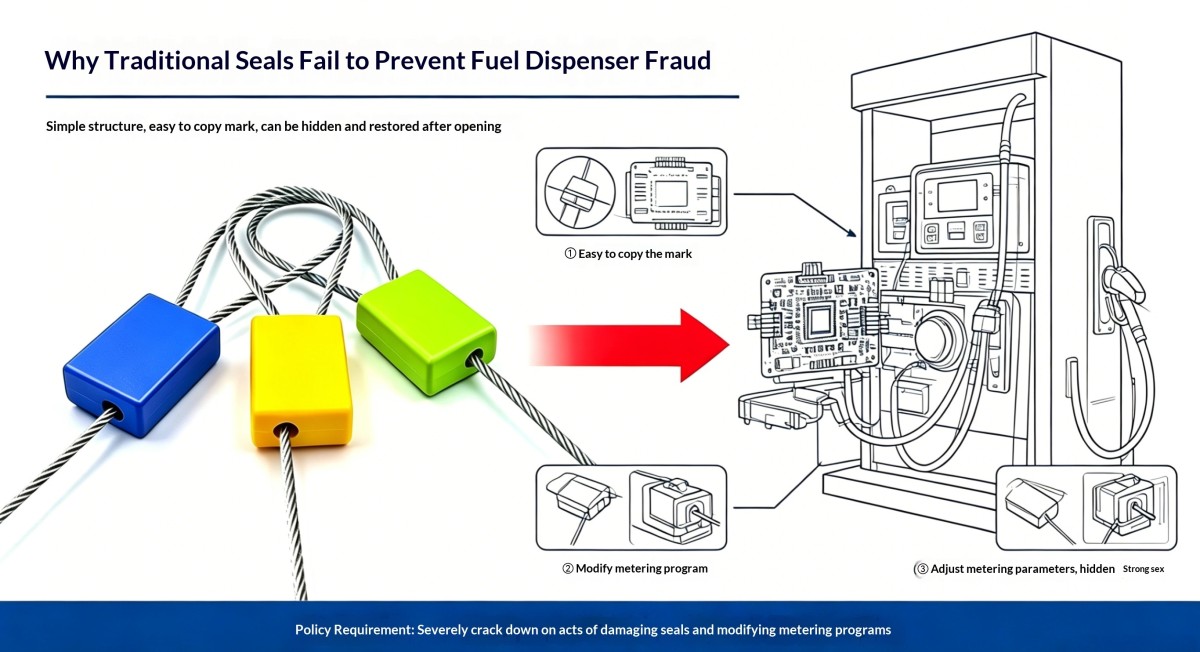
First, weak anti-counterfeiting capabilities make it difficult to prevent fraud risks. The Shanxi management measures explicitly list "destroying seals and tampering with measurement programs" as behaviors subject to severe punishment. However, traditional physical seals have a simple structure, their application marks are easy to replicate, and they can be restored at a low cost after illegal opening, making them highly deceptive. It is difficult for regulatory authorities to conduct comprehensive inspections relying solely on manual patrols, leaving loopholes for cheating behaviors like mainboard modification and measurement parameter adjustment.
Second, lagging status awareness leads to delayed anomaly handling. The core principle of smart regulation is "dynamic monitoring." Yet, traditional seals lack data transmission and status awareness capabilities, and thus cannot proactively report a broken status. Violations are often only discovered when fuel volume data has been abnormal for a long period or when consumers report them. By then, the illegal operations have already caused substantial losses, presenting a clear gap from the real-time supervision required by policies.
Third, extensive management methods make full-lifecycle control difficult to implement. Policies require gas stations to establish complete equipment management ledgers and strictly fulfill equipment change reporting systems. However, the procurement, application, inspection, and removal of traditional seals entirely rely on manual paper records, which is not only inefficient and error-prone but also fails to achieve full-link traceability from warehousing to scrapping, making it hard to meet regulatory standards for equipment management standardization.
Fourth, high disposable costs create a heavy O&M burden for enterprises. Routine measurement verification and component replacement of fuel dispensers require breaking seals. The disposable nature of traditional seals leads to persistently high consumable costs for gas stations over the long term. Frequent breaking and resealing also increase the workload for O&M personnel, contradicting the business goal of reducing costs and increasing efficiency.
Fifth, difficulties in traceability and evidence collection result in insufficient law enforcement efficiency. In the event of measurement disputes or fraud cases, traditional manually recorded files are easily lost or tampered with. This makes it difficult to quickly identify the time of seal-breaking and the responsible personnel, leading to long and difficult evidence collection cycles that cannot support the strict and rapid investigation mechanism required by policies.
Full-Link Smart Control: Building a New Regulatory System for Fuel Dispenser Seals
Addressing the regulatory shortcomings of traditional seals, the fuel dispenser smart seal management system integrates technologies such as RFID, wireless sensing, and IoT transmission. Adopting a three-tier architecture of "Smart Hardware + Regulatory Platform + Mobile Application," it achieves a comprehensive upgrade of fuel dispenser seals from "physical sealing" to "digital smart control." The system can seamlessly connect to provincial refined oil circulation smart regulatory platforms, serving as the terminal data entry point for the entire smart regulatory system.
On the hardware level, the system consists of two core devices that deeply adapt to gas station scenarios. The first is the intrinsically safe explosion-proof IoT smart seal, which is directly installed on core measurement components such as fuel dispenser mainboards, flow meters, and encoders, completely replacing traditional physical seals. Each seal has a built-in globally unique ID chip and employs a "three-code-in-one" (NFC, QR code, and STID code) anti-counterfeiting technology to eliminate the possibility of cloning from a technical standpoint. The product meets gas station explosion-proof safety standards and can operate stably in oi
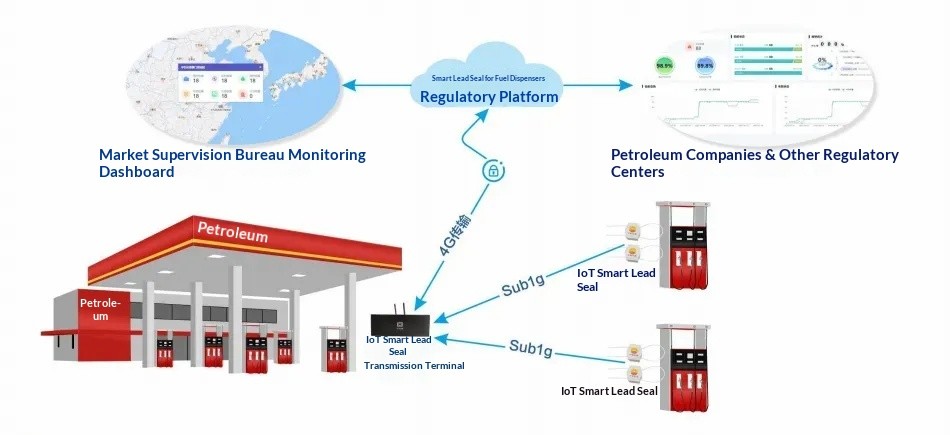
On the system level, it forms a complete capability matrix of "Basic Services - Regulatory Platform - Mobile Terminals." The underlying basic services handle device communication, data parsing, and alarm triggering, providing stable technical support for upper-layer applications. The fuel dispenser smart seal regulatory platform, aimed at regulatory departments and operating enterprises, features full-lifecycle management of seals, scheduling and issuing of inspection tasks, real-time alarm monitoring, and multi-dimensional statistical analysis. It intuitively displays core data such as seal online rates, intact rates, and abnormal alarms across all stations in the jurisdicti
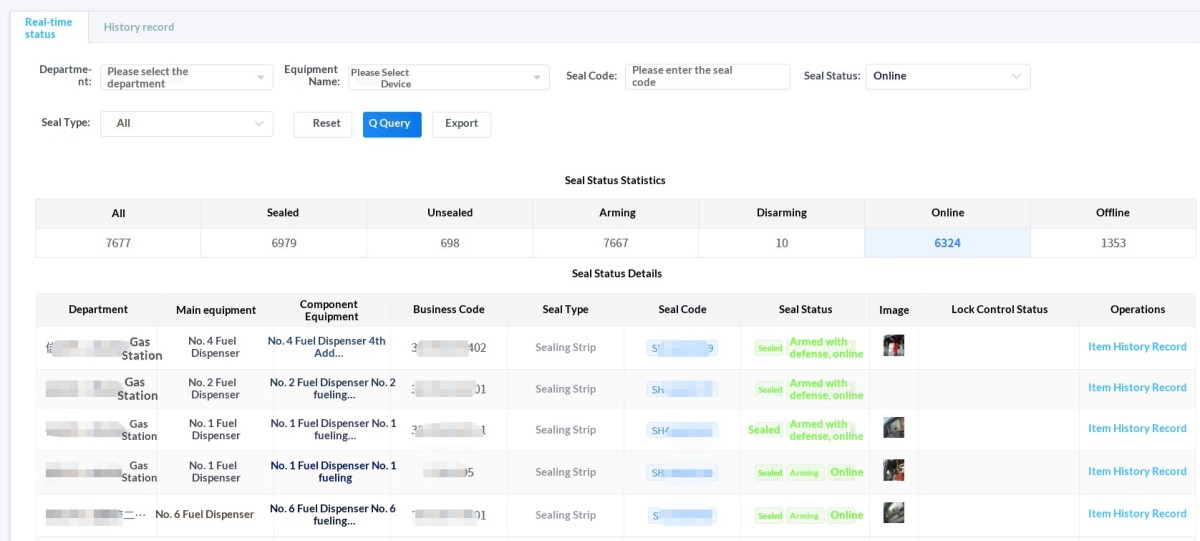
In terms of business processes, the system builds a fully closed-loop management link from seal warehousing to scrapping. After procurement, seals are entered into the platform to establish electronic archives. During on-site installation, they are bound to corresponding fuel dispenser components and armed. Routine O&M executes inspection tasks as planned. Should illegal breaking or device offline events occur, multi-level warnings are immediately triggered. For legal maintenance, seals are removed only after fulfilling the online reporting process. Operating records, personnel information, and on-site photos of the entire process are automatically archived, forming a complete and traceable management chain.
Benchmarking Regulatory Requirements: Unleashing Multi-dimensional Compliance Value
The application of smart seals for fuel dispensers is not only a product upgrade at the technical level but also a precise implementation of regional smart regulation policies for refined oil, bringing mutual value benefits to both regulatory authorities and refined oil operating enterprises.
First, strong anti-counterfeiting technology curbs measurement fraud at its root. The unique identity authentication system of the "three codes in one" makes the seals impossible to clone or replace. This technically blocks the path of modifying fuel dispensers and committing measurement fraud by destroying seals, directly corresponding to the regulatory requirement of "strictly cracking down on seal destruction and measurement data tampering," thereby significantly increasing the illegal costs of measurement fraud.
Second, real-time early warnings guarantee dynamic data control. Smart seals monitor their own status online 24/7. Abnormalities such as illegal breaking, device offline, and abnormal voltage trigger alarms within seconds, which are synchronized to the regulatory platform and mobile terminals. This completely transforms the passive model of traditional "post-incident investigation," achieving dynamic and real-time supervision. This capability not only effectively ensures the continuity and accuracy of platform data collection but also helps gas stations stably meet the regulatory assessment requirements for equipment online rates.
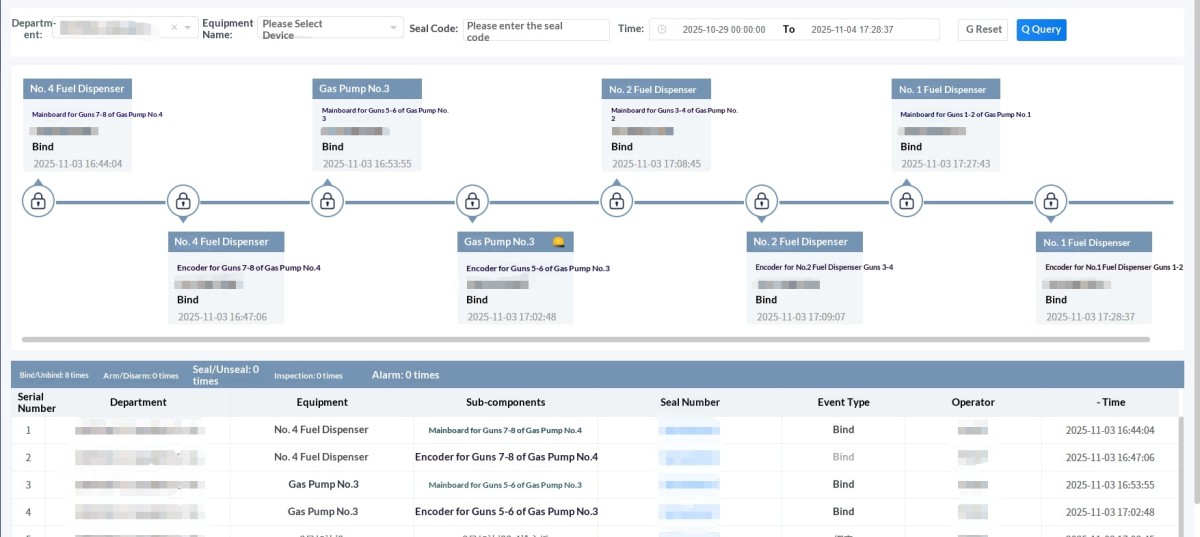
Third, full-process traceability standardizes O&M management. The system automatically records all operations throughout the seal's full lifecycle. Every step—from application and removal to inspection and maintenance—is searchable and traceable, highly aligning with the policy requirement of "establishing equipment management ledgers and fulfilling reporting obligations." This both helps gas stations standardize internal O&M management and reduce manual errors, and provides regulatory departments with complete and credible data foundations for supervision and inspection.
Fourth, recyclability reduces corporate compliance costs. Unlike the disposable nature of traditional seals, smart seals can be reused after being legally removed, significantly reducing long-term consumable procurement costs. Meanwhile, the online management model also reduces the workload of manual ledgers, allowing enterprises to optimize operating costs while meeting regulatory requirements.
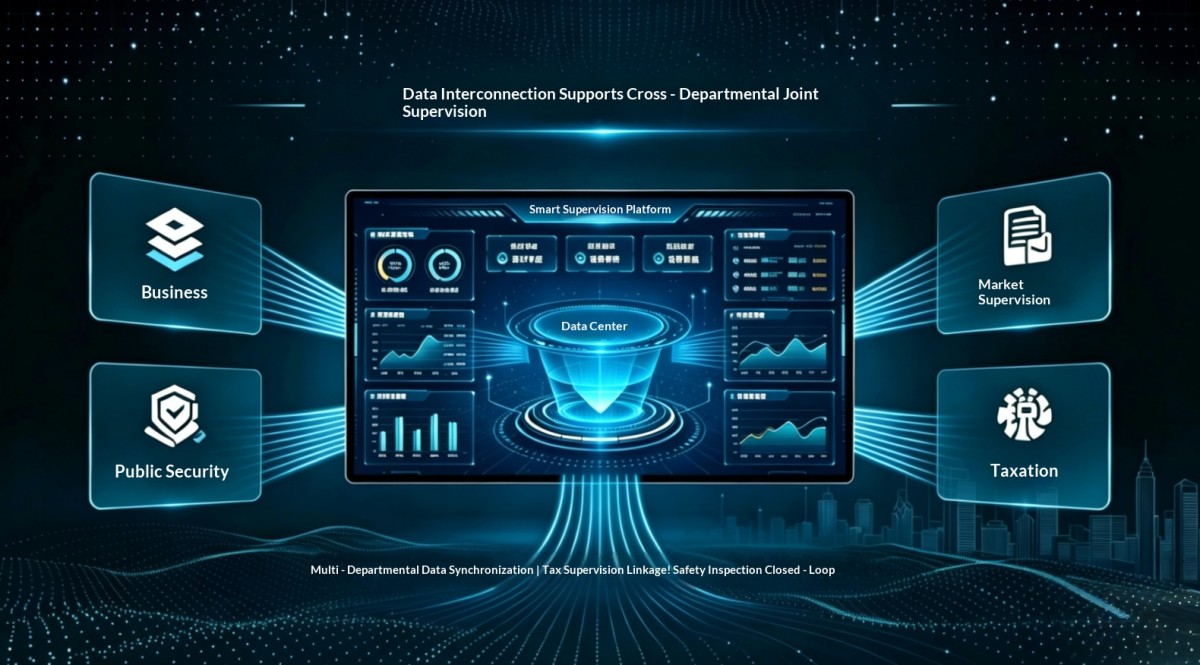
Fifth, data interoperability supports cross-departmental joint supervision. The system supports data docking with provincial refined oil circulation smart regulatory platforms, synchronizing data such as seal status and abnormal alarms to multiple departments including commerce, market regulation, taxation, and public security. This forms a synergy with established local cross-departmental joint regulatory mechanisms, providing data support for measurement enforcement, tax regulation, and safety inspections, truly generating regulatory synergy.
Smart Regulation Becomes an Industry Trend: Smart Seals Will Become Standard for Gas Stations
Currently, the fuel dispenser smart seal management system has been deployed and applied in multiple Sinopec and PetroChina stations, as well as market regulatory departments across the country, effectively improving measurement supervision efficiency and reducing the incidence of measurement fraud. With the continuous advancement of smart regulation for refined oil circulation, many regions nationwide have successively introduced supporting regulatory policies, making requirements for fuel dispenser measurement supervision and real-time data uploading increasingly stringent.
Judging from the policy orientation in places like Shanxi, the digitalization and refinement of refined oil supervision represent an inevitable industry trend, while the intelligence of terminal measurement equipment serves as the cornerstone of the entire regulatory system. As the core technical means for preventing fuel dispenser measurement fraud, smart seals are transitioning from an "optional upgrade" to a "mandatory compliance requirement." In the future, with the comprehensive coverage of smart regulatory platforms, smart seals will become standard equipment for gas stations, fortifying a solid technical defense line for standardizing the refined oil market order, protecting consumer rights, and achieving high-quality development in the industry.
Awesome! Share to:
Related Posts
- CETC Kingbase Reviews Database Deployment Strengths and Gaps in Oil and Petrochemicals
- Hubei Issues 15th Five-Year Plan for a New Energy System, Targets Peak Oil Consumption
- Iran Says Seven Ships Attacked as Global Oil Prices Surge Above $111
- Russia’s Oil Export Discounts to China Narrow Sharply
- U.S. Crude Oil Futures Rise 2.17% to $100.24 on October 21

First class quality service and professional after-sales team.
In order to provide you the suitable machine , pls offer below message for us
Get in Touch
We respect your confidentiality and all information are protected.