
News
Our Portable Flow Meter Solution Deployed for Fuel Tanker Operations in Nigeria
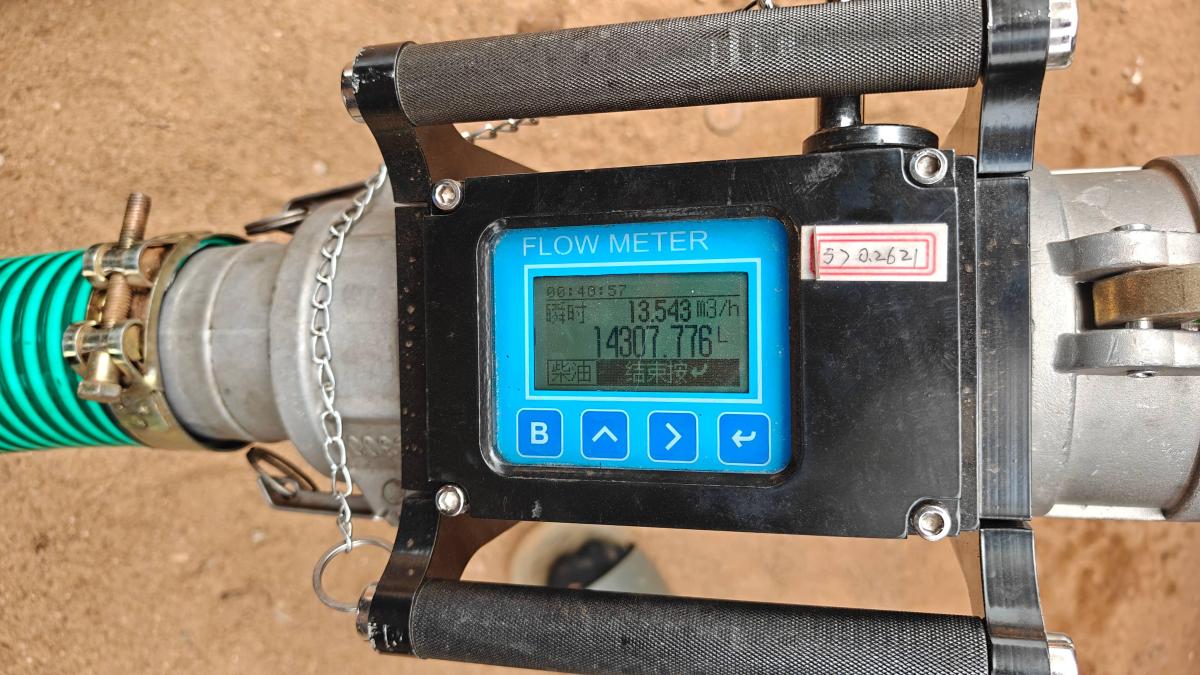
Our engineering team recently completed a field deployment project in Lagos, Nigeria, supplying and commissioning our portable flow meters for a local fuel distribution company. Designed for flexible, on-demand fuel measurement across a mixed tanker fleet, the portable flow meter is now being used by the customer at depot loading and unloading points to verify delivery volumes, reduce measurement disputes, and feed metering data directly into their digital fleet management workflow.
Why a Portable Solution
The customer operates a fleet of fuel tankers serving petrol stations and industrial clients across Lagos and surrounding regions. Rather than permanently retrofitting every vehicle with a fixed meter, the customer needed a metering tool that could be moved between trucks, deployed at either the loading rack or the unloading point, and brought into service quickly without piping modifications.
Our portable flow meter was selected for exactly this reason. It is a self-contained, battery-powered instrument that can be connected inline at any standard oil loading or unloading port within minutes. No fixed installation, no auxiliary pump, and no permanent wiring to the vehicle are required. This flexibility allows the customer to use a small number of units across a much larger fleet, significantly lowering the cost per vehicle compared with permanent retrofitting.
Product Highlights
The portable flow meter is built around a low-power ARM core design with a clear dot-matrix LCD and touch keys. It runs on a long-life 3.6V battery and draws only a fraction of a milliamp in normal operation, with an even lower sleep-current consumption, allowing it to remain in service through extended working shifts before battery replacement is needed.
Four characteristics made it particularly suitable for the Nigerian deployment:
Flexible Application Across Scenarios. The meter can be used in a wide range of metering situations — fuel loading at the depot, unloading at the station, or spot-check verification on any tanker. Its portable form factor means it follows the work, rather than forcing the work to come to it.
4G Connectivity and System Integration. Equipped with built-in 4G communication, the flow meter can transmit metering data directly and seamlessly to our smart seal management system. Each unloading event is time-stamped, volume-recorded, and associated with the relevant seal and vehicle, creating a complete digital trail across the customer's operations.
Standalone Operation Mode. In addition to networked use, the meter supports fully independent operation. It stores every unloading record in its internal memory and allows the operator to export the data later via a USB port for statistical reporting and reconciliation. This is especially valuable when the vehicle is operating in areas with weak or intermittent cellular coverage — measurement and recording continue normally, and data is uploaded once connectivity is restored.
Reliable Field Performance. With an operating temperature range designed to handle hot tropical conditions and a robust housing built for daily transport and repeated connections, the meter is engineered for sustained use in demanding field environments. Measurement accuracy is rated at ±0.03%, ensuring that every loading and unloading figure is trustworthy.
Deployment and Training
During the week-long on-site visit, our engineer worked alongside the customer's depot team to demonstrate proper connection and operation. Each unit was connected inline at the bottom discharge port of a representative tanker, a calibration check was performed against the depot's reference master meter, and a full unloading cycle was observed end-to-end to confirm that volume readings matched expectations and that 4G data was arriving correctly on the cloud platform.
The customer's depot operators were trained on routine operation: connecting the meter, starting and stopping a measurement, reading the on-screen total, exporting records via USB when needed, and recognizing basic status indicators. We also walked the customer's management team through the cloud dashboard, showing them how metering records appear alongside smart seal events and vehicle location data, and how to pull a daily reconciliation report.
Outcomes
By the end of the deployment, the customer had a working, repeatable workflow: when a tanker arrives for unloading, the portable flow meter is connected inline, the unloading is measured and recorded, the data is transmitted over 4G to the management platform, and the record is automatically tied to that vehicle's smart seal status. Operators no longer rely solely on manual meter readings or paper tickets to confirm delivery volumes.
The customer's operations manager noted that the portable approach fit their business well: they can rotate the meters among vehicles and use them where they are most needed on any given day, rather than committing to a permanent hardware installation on every truck. The standalone recording mode also gives them confidence that data will not be lost even when a run takes them outside reliable network coverage.
Awesome! Share to:
Related Posts
- CETC Kingbase Reviews Database Deployment Strengths and Gaps in Oil and Petrochemicals
- Hubei Issues 15th Five-Year Plan for a New Energy System, Targets Peak Oil Consumption
- Iran Says Seven Ships Attacked as Global Oil Prices Surge Above $111
- Russia’s Oil Export Discounts to China Narrow Sharply
- U.S. Crude Oil Futures Rise 2.17% to $100.24 on October 21

First class quality service and professional after-sales team.
In order to provide you the suitable machine , pls offer below message for us
Get in Touch
We respect your confidentiality and all information are protected.