
Recently, the Inner Mongolia Market Supervision Administration exposed several typical cases of metrology violations. The Shirun Gas Station in Hohhot’s Xincheng District was fined 4.6494 million yuan for illegally connecting “black connectors” to 5 fuel dispensers and 8 nozzles, thereby manipulating fuel measurement data. All the fuel dispensers involved were also confiscated, marking the highest fine imposed in this case. This severe punishment once again demonstrates the regulatory authorities’ firm resolve to crack down on fuel dispenser fraud and protect consumers’ rights.
In recent years, fuel dispenser fraud has become a prominent problem in the refined oil market. Unscrupulous operators, well-versed in the workings of fuel dispensers, use various covert methods such as modifying circuitry, installing cheating devices, and embedding tampering software to create a situation where the displayed fuel quantity is higher than the actual amount dispensed. The mechanism behind this fraud is sophisticated: while the fuel dispenser’s main board records the actual amount of fuel dispensed, operators alter the data transmission process, artificially increasing the discrepancy between the displayed figure and the actual amount. This allows them to deduct fuel from customers and reap illegal profits. In more extreme cases, these operators use cheating software to manipulate tax-related data, evading government taxes. This not only harms consumers’ rights but also undermines market fairness and the tax collection system.
According to national enforcement data, it’s urgent to address fuel dispenser fraud. In 2025 alone, official reports showed that 3,904 high-risk gas stations were investigated and dealt with nationwide. The total amount of taxes, late fees, and fines collected exceeded 3.644 billion yuan. Meanwhile, fraud tactics have become more technologically advanced, concealed, and organized. Traditional physical modifications have given way to remote software control and backend program manipulation. As a result, traditional supervision methods are struggling to detect, document, and trace such fraud.
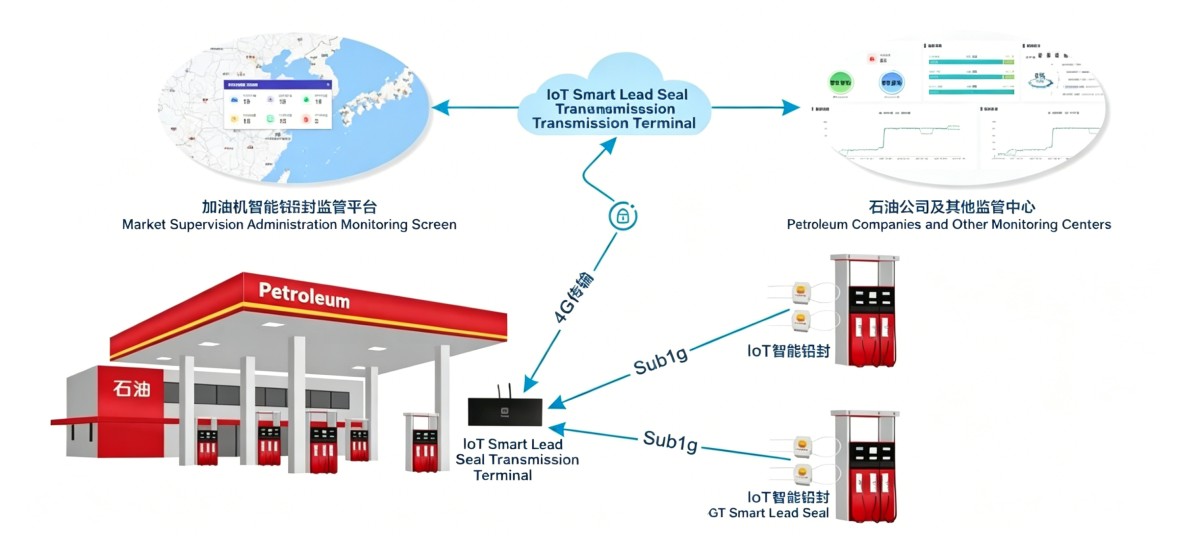
The shortcomings of the traditional physical seal-based supervision method only exacerbate regulatory challenges. According to national standards and metrological regulations, critical components such as fuel dispenser flow meters, encoders, and control boards must be sealed for proper monitoring. However, traditional seals have numerous flaws: their anti-counterfeiting mechanisms are weak, and the markings can be easily replicated, making them ineffective against sophisticated tampering attempts. They also lack real-time monitoring capabilities, making it difficult to detect unauthorized modifications promptly. Additionally, reliance on manual records leads to inefficient management across the entire process of procurement, sealing, inspection, and unsealing, with a high rate of human errors. Moreover, since these seals are disposable, they result in significant resource waste in situations requiring frequent inspections. They also prevent tracking equipment throughout its lifecycle. In case of fraud, it becomes extremely difficult to gather evidence and hold accountable those responsible.
Awesome! Share to:
Related Posts
- CETC Kingbase Reviews Database Deployment Strengths and Gaps in Oil and Petrochemicals
- Hubei Issues 15th Five-Year Plan for a New Energy System, Targets Peak Oil Consumption
- Iran Says Seven Ships Attacked as Global Oil Prices Surge Above $111
- Russia’s Oil Export Discounts to China Narrow Sharply
- U.S. Crude Oil Futures Rise 2.17% to $100.24 on October 21

First class quality service and professional after-sales team.
In order to provide you the suitable machine , pls offer below message for us
Get in Touch
We respect your confidentiality and all information are protected.