
News
How to set up remote tanker monitoring for fleet compliance? It usually starts with a practical decision, not a software decision: what exactly must be monitored, proven, and acted on in daily tanker operations. For petroleum and logistics fleets, compliance is rarely about vehicle location alone. It often involves tank status, loading and unloading behavior, route deviations, driver activity, alarm handling, communication stability, and the ability to reconstruct events after an incident or inspection.
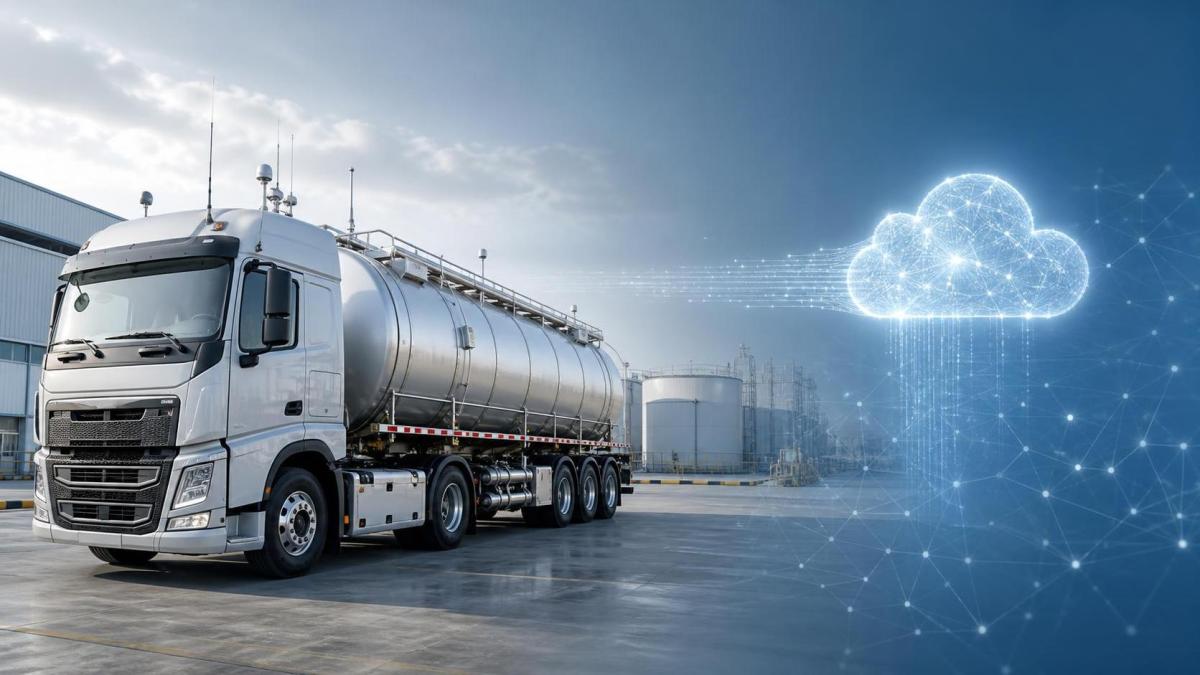
That is why a workable remote tanker monitoring system is typically built as an IoT stack rather than a single device. The vehicle, the tank, the driver terminal, the wireless network, and the control center all have to exchange data in near real time. If any one layer is weak, the whole compliance chain becomes unreliable. Many fleet operators discover this only after deployment, when they realize they can see dots on a map but still cannot prove whether a tanker opened a valve at the wrong site, exceeded a geofenced zone, or lost communication during a critical transport segment.
A better approach is to design the system backward from operational risk. If the fleet carries fuel, chemicals, or other sensitive liquid cargo, the monitoring framework needs to support both supervision and evidence. It should tell dispatch what is happening now, and it should also preserve enough structured data for internal review, customer disputes, and regulatory documentation where required.
Start with the compliance events that matter
Before choosing hardware, list the events your operation cannot afford to miss. In tanker fleets, these often include unauthorized opening of compartments, route deviations, speeding in restricted areas, prolonged idling, loss of communication, abnormal pressure or level readings if sensors are installed, and mismatches between planned and actual loading or delivery activity. Different operators will rank these differently. A cross-city fuel distributor may care most about route integrity and unloading confirmation. A petrochemical carrier may place more weight on hazardous operation controls and alarm escalation.
This early definition matters because it determines whether your architecture should focus on telematics only, or combine telematics with tank-side sensing, onboard video, RFID or driver identification, and command-center workflows. Too many projects begin with a generic fleet tracking platform and try to add tanker logic later. That can work for simple visibility, but it often struggles when the operator needs precise event correlation between vehicle movement, valve state, and driver actions.
The core system usually has five layers
A remote tanker monitoring setup for compliance usually combines five functional layers.
The first is onboard acquisition: GPS, vehicle status, sensor inputs, compartment or valve signals, driver terminal data, and in some projects video or image capture. The second is communications: cellular broadband is the usual backbone, but coverage quality, antenna placement, and fallback behavior matter more than many buyers expect. The third is edge logic inside the vehicle unit, where basic rules can trigger local alarms or preserve data during temporary signal loss. The fourth is the cloud or central platform for event processing, visualization, storage, and reporting. The fifth is operational response: dispatchers, supervisors, or a monitoring center who know what to do when the system raises an exception.
This is one reason companies with both hardware and platform experience are often easier to work with in tanker projects than pure software vendors. Zhengzhou HUGO Information Technology Co., Ltd., established in 2012, has focused on integrated IoT and IoV wireless broadband communication systems and has built solutions for petroleum, petrochemical, and logistics scenarios. In practice, that kind of background matters because tanker monitoring is not just a dashboard problem. It is a field deployment problem, a communications problem, and an operations problem at the same time.
 Choose hardware for field conditions, not brochure features
For tanker compliance, reliability in motion matters more than feature count. The onboard unit should have stable positioning, enough I/O interfaces for the sensors you actually plan to use, secure data transmission, and local storage for periods when the network drops. If cameras are involved, bandwidth planning becomes part of compliance planning. Video is useful, but if uplink conditions are poor and footage is not buffered properly, the fleet may still fail to reconstruct an event.
Sensor selection also needs restraint. Not every tanker needs the same instrumentation. Some fleets only need door or valve open/close status, geofencing, and driver identification. Others may require liquid level monitoring, pressure-related signals, or integration with loading systems. The right mix depends on cargo type, route risk, customer requirements, and local operating rules. Adding sensors without a clear workflow can create noise instead of control.
A useful question during evaluation is simple: if an incident happens at 2:15 a.m. in a low-signal corridor, what evidence will still exist at 8:00 a.m.? Hardware, buffering logic, and time synchronization all affect that answer.
Build the platform around exceptions, not just maps
A map interface is necessary, but it is not the system. Compliance teams need exception logic they can trust: route deviation alerts, stop-duration thresholds, off-hours activity warnings, unauthorized compartment operations, loss of terminal contact, and escalation paths when operators do not acknowledge alarms. Historical playback should combine location, speed, event logs, and relevant sensor states on the same timeline. Without that, post-event review becomes manual and slow.
Reporting deserves the same attention. Many operators ask for “compliance reports” before they define what those reports are for. Internal management, customer proof of service, and regulator-facing documentation are not the same thing. A good platform should let the fleet export route history, stop records, alarm logs, communication records, and driver or vehicle activity in a format the business can actually use. In some regions or contract environments, retention periods and evidence standards may need to be confirmed in advance.
Do not overlook communications and operational support
Remote monitoring fails quietly when communications are treated as a commodity. Tanker routes often pass through industrial areas, depots, tunnels, remote highways, and border-like handoff zones between networks. Even where 4G or similar broadband coverage is generally available, real performance can vary by route and by vehicle installation quality. Antenna placement, shielding, power stability, and network roaming arrangements all influence whether alarms arrive when they should.
Operational support is the other side of the same problem. A platform that runs continuously needs people and process behind it. HUGO’s structure is notable here: more than 100 employees, over 30 with doctoral or master’s degrees, branches in Shanghai and Hubei, six offices, 25 service stations, and an independent 24/7 operation and monitoring center. Those details matter less as a corporate profile than as an indicator of what large or distributed monitoring projects usually require: field service reach, engineering depth, and continuous operational handling rather than one-time installation.
Integration is where many projects become harder than expected
Fleet operators often assume the monitoring platform can easily connect to ERP, dispatch, maintenance, or loading management systems. Sometimes it can. Sometimes the obstacle is not the API, but inconsistent business logic between systems. For example, what counts as a completed delivery event in the transport system may not match the timestamp logic in the tanker monitoring system. Driver IDs may exist in one database but not align with vehicle terminal accounts. Alarm categories may be too broad to support serious reporting.
The practical fix is to define a small number of shared operational objects before integration begins: vehicle, driver, route, task, stop, compartment event, and alarm event. If those are not standardized, integration tends to produce dashboards that look connected but are difficult to audit.
A phased rollout is usually safer than a full fleet launch
For compliance-heavy tanker fleets, pilot deployment is not just a technical test. It is where you validate field installation quality, false alarm rates, network stability, dispatch procedures, and report usefulness. A pilot should include mixed route conditions and at least a few vehicles with different operational patterns. If every test vehicle follows the same route and same depot routine, the result can look cleaner than real operations.
During this phase, pay attention to three things that are often ignored. First, are operators responding consistently to alarms, or bypassing them? Second, are drivers clear about what is being monitored and why? Third, does the fleet get enough evidence from the system to investigate a dispute without pulling data from multiple tools? If the answer to the third question is no, the design may still be too fragmented.
Common mistakes when setting up remote tanker monitoring
One common mistake is treating compliance as a reporting module rather than an operational discipline. If alarms are not tied to clear workflows, the system becomes a passive recorder.
Another is buying more sensors than the organization can maintain. Tanker fleets work in harsh environments. Calibration, inspection, replacement cycles, and wiring quality all affect long-term accuracy.
There is also a softer mistake: assuming drivers and dispatchers will naturally adopt the system. They usually will not unless the monitoring rules are understandable and the platform reduces friction instead of adding it.
And finally, some fleets underestimate service coverage. A technically sound solution can still fail if field faults take too long to resolve. For multi-region operations, maintenance response and spare-part availability should be discussed early, not after rollout.
What a sensible next step looks like
If you are planning how to set up remote tanker monitoring for fleet compliance, the smartest next step is usually not to ask for a generic platform demo. Start with a route-and-risk review, then map the specific events you need to capture, the evidence you need to retain, and the response process you expect from your team. From there, hardware interfaces, communications design, platform rules, and integration requirements become much easier to judge.
For operators in petroleum, petrochemical, and logistics environments, the most dependable systems are usually the ones designed around real field constraints: unstable signal conditions, mixed vehicle types, after-hours incidents, and the need for 24/7 supervision. If a supplier can explain how those realities are handled in deployment, support, and data recovery, you are probably looking at a serious compliance solution rather than a tracking tool with extra labels.
That is the difference that matters. Not whether the system can monitor a tanker, but whether it can still provide trusted visibility and usable records when operations become complicated.
Awesome! Share to:
Related Posts
- CETC Kingbase Reviews Database Deployment Strengths and Gaps in Oil and Petrochemicals
- Hubei Issues 15th Five-Year Plan for a New Energy System, Targets Peak Oil Consumption
- Iran Says Seven Ships Attacked as Global Oil Prices Surge Above $111
- Russia’s Oil Export Discounts to China Narrow Sharply
- U.S. Crude Oil Futures Rise 2.17% to $100.24 on October 21

First class quality service and professional after-sales team.
In order to provide you the suitable machine , pls offer below message for us
Get in Touch
We respect your confidentiality and all information are protected.