
Control benefits become measurable when a tanker transport operation can connect location, cargo condition, dispatch timing, and exception handling into one auditable workflow. In oil distribution, the issue is rarely simple visibility. The harder problem is whether the transport record can reliably answer practical questions at the exact moment they matter: Is the tanker following the approved route, was the unloading event completed at the right site, did the compartment status change at an unexpected stop, and can the dispatch center distinguish a real incident from a weak signal or a device fault? A tanker oil tracking system starts to justify its cost when it shortens that gap between movement in the field and operational certainty in the control room.
Selection should therefore begin with control points rather than with a feature catalog. A fleet carrying refined oil, crude-related products, or chemical liquids usually needs more than a map with moving icons. Hardware resilience matters because the onboard environment includes vibration, heat, moisture, dust, unstable vehicle power, and occasional signal blockage near depots, tunnels, industrial facilities, or remote roads. If the terminal cannot maintain stable communication after power fluctuation or if it stores too little data during network interruption, the resulting blind spots weaken the very controls the system is supposed to create.
Where measurable control usually appears
The first clear benefit is route discipline. Geofencing is often treated as a basic function, but its value depends on how finely it can be configured. A broad fence around a terminal may confirm arrival, yet it may not distinguish waiting at the gate from actual loading. A narrower logic using entry point, dwell time, and movement pattern can reduce false confirmation. The same applies to customer sites. If the system records a stop but cannot tie that stop to an authorized delivery location and expected unloading window, the transport record remains incomplete.
The second benefit is cargo-event correlation. In liquid transport, a location log alone does not explain whether the cargo remained intact during transit. Useful control often comes from combining positioning with sensor inputs such as compartment door status, valve state, liquid level, pressure-related signals where applicable, or other I/O events linked to loading and discharge procedures. This does not remove the need for field discipline, but it does create a reviewable event chain. When an unexpected opening event appears outside an approved zone, the operation can investigate with far more precision than a driver call and handwritten note would allow.
Another measurable area is dispatch response. Without an integrated event hierarchy, a control center can become overloaded by alarms that have little operational meaning. Overspeed, route deviation, prolonged idle time, ignition anomalies, and cargo-related triggers should not all be treated equally. The system needs rule logic that reflects actual transport risk. Otherwise, teams either ignore alerts or spend time resolving noise. A system that supports tiered alarm thresholds, event linkage, and replay of the vehicle path is more likely to produce action instead of dashboard clutter.
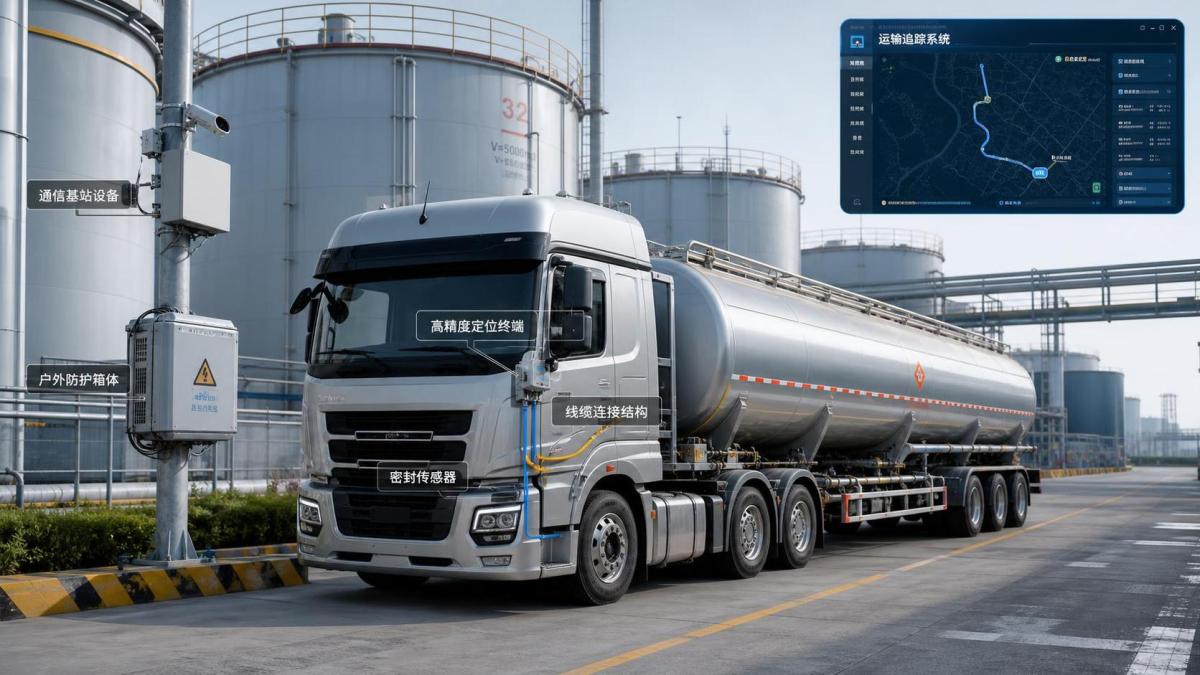
Hardware choices often decide software credibility
Software may look polished during a demonstration, but tanker operations usually expose weaknesses at the hardware layer first. Terminals should be evaluated for enclosure durability, connector stability, antenna placement constraints, onboard data buffering, and power protection. In practice, poor wiring design can create repeated disconnects that appear to be network issues. Loose sensor integration can generate false cargo alarms. A procurement decision that focuses only on interface quality may later discover that maintenance visits are driven by harness failure, corrosion at terminals, or poorly protected installation points under the chassis.
For fleets operating across mixed climates and road conditions, the installation method deserves more attention than it often receives. Mounting positions should account for heat exposure, water ingress, tamper accessibility, and signal quality. The GNSS antenna may perform well in one vehicle model but poorly in another because of body structure or shielding by auxiliary equipment. Cable runs near high-interference electrical components may affect sensor stability. These are not minor engineering details; they affect the trustworthiness of route, stop, and cargo records.
A related mistake is assuming that every tanker vehicle can use the same device package. Fleet composition may include tractors with different power systems, older tankers with limited sensor interfaces, or trailers that require separate identification logic. In some operations, trailer recognition is as important as tractor tracking because the cargo risk follows the tank body rather than the cabin. If that distinction matters operationally, the architecture should support it from the start instead of relying on manual matching after dispatch.
Data quality matters more than dashboard density
Many systems can display maps, tracks, and alerts. The harder test is whether the underlying data can support investigation, reconciliation, and internal control. Timestamp consistency is one example. If server time, device time, and event upload time drift apart, reconstructed incidents become harder to defend. Historical playback should preserve event sequencing even when data was cached offline and uploaded later. Otherwise, a route deviation may appear to happen after a cargo alarm when the real order was reversed.
Decision quality also depends on how the platform handles exception context. A tanker stopping outside an approved route may indicate unauthorized activity, but it may also reflect road closure, inspection, queueing, or emergency response. The system should allow operators to annotate, classify, and retain the reason for an exception without breaking the audit trail. When every anomaly is resolved informally through calls or chat messages, later review becomes fragmented and inconsistent.
Integration with dispatch, maintenance, and operational reporting should be examined carefully. A system may be technically capable of collecting rich field data while still failing to improve control because the data remains isolated. Useful outputs usually include route execution records, dwell analysis, alarm closure records, and equipment health indicators that can be shared across departments. The value is not in building a large data lake; it is in reducing repeated manual reconciliation between transport logs, site confirmations, and maintenance notes.
Common selection errors
- Choosing a system on the strength of live map visibility alone, while leaving cargo-event monitoring undefined until after deployment. That usually creates expensive integration changes once operational gaps become obvious.
- Underestimating communications behavior in weak coverage areas. If the design assumes uninterrupted connectivity, event latency and missing records may later be mistaken for poor field compliance.
- Approving a broad alert library without deciding which alarms require immediate intervention, which need daily review, and which are only useful for trend analysis.
- Ignoring serviceability. A device that is difficult to inspect, replace, or recalibrate in the field can turn small faults into long periods of unreliable data.
Release risk is often concentrated in rollout sequencing. Installing devices across the full fleet before validating route rules, site geofences, sensor calibration, and exception workflows can produce a flood of bad alerts and weak confidence. A narrower operational validation is usually more informative: confirm that a completed trip can be reconstructed accurately from dispatch to loading, transit, arrival, discharge, and return. If any one of those points remains ambiguous, the promised control benefit is not yet real.
Maintenance planning should be built into the purchase decision instead of being left to later service arrangements. Tanker operations put steady strain on connectors, cables, sensors, and power inputs. Periodic inspection intervals, spare unit handling, firmware management, and alarm logic updates all affect long-term control quality. If maintenance depends on ad hoc troubleshooting, system performance will drift gradually, and the organization may continue making decisions on records that no longer reflect actual field conditions.
A sound selection is usually the one that can preserve reliable evidence under imperfect conditions: partial signal loss, harsh installation environments, mixed vehicle configurations, and operational exceptions that do not fit a clean demo scenario. That is when tracking stops being a screen feature and becomes a control instrument.
