
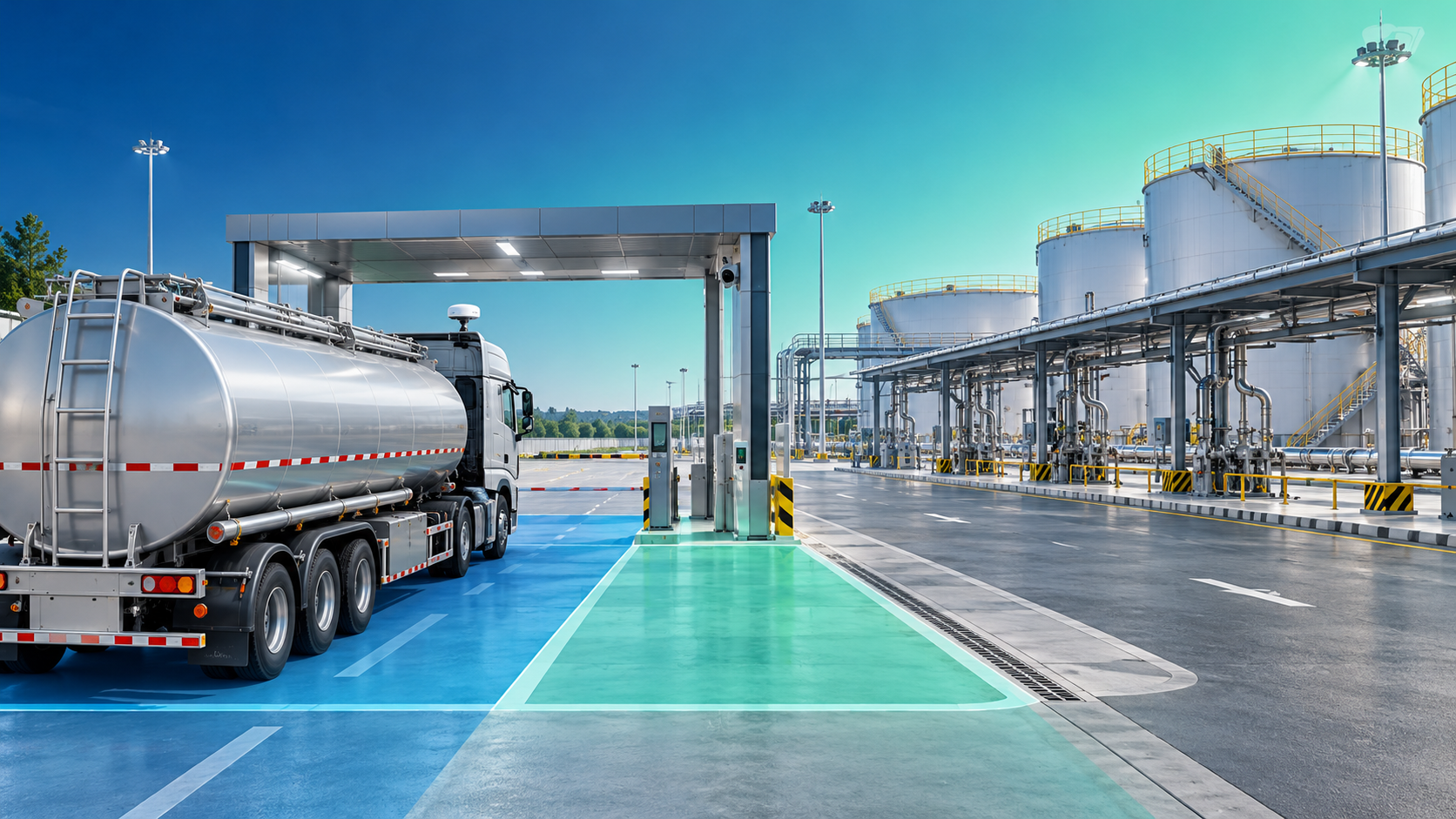
What Is A Tanker Anti-Theft Sensor Lock?
A Tanker Anti-Theft Sensor Lock is an intelligent security device installed on a tanker truck's loading hatch, discharge valve, cabinet, or other controlled access point. It combines a mechanical locking structure with sensors that detect lock state, seal integrity, opening events, tampering, and, in connected designs, location and communication status. Its purpose is to create an accountable chain of custody for fuel, chemicals, and other bulk liquids.
Unlike a conventional padlock or disposable seal, the device produces operational evidence. A dispatch team can compare an authorized loading, route, stop, and unloading event against lock activity. When the physical state and digital record disagree, the fleet can investigate quickly. This makes the Tanker Anti-Theft Sensor Lock relevant to cargo protection, compliance workflows, delivery verification, and shrinkage control.
The exact configuration depends on cargo risk, vehicle design, and operating jurisdiction. Buyers should distinguish between a sensor-equipped electronic seal, a GPS smart lock, and a full monitoring solution that connects locks with telematics, geofencing, dashboards, and emergency processes. The lock is one control point; effective security depends on how it is configured, monitored, and managed throughout the transport cycle.
Why Connected Locking Matters In Tanker Logistics
Bulk-liquid theft can occur through unauthorized hatch access, valve discharge, hose connections, substituted seals, route deviations, or poorly controlled handovers. The financial impact may include product loss, delivery disputes, cleanup exposure, delayed operations, and weaker customer confidence. For hazardous cargo, an unverified access event can also introduce a material safety and compliance concern that cannot be managed by a simple visual inspection alone.
A connected Tanker Anti-Theft Sensor Lock helps operations move from retrospective discovery to event-based response. Lock status can be linked to assigned vehicles, drivers, routes, delivery orders, and approved locations. Alerts should be actionable rather than merely frequent, with defined escalation rules for unauthorized opening, low battery, communication interruption, prolonged stops, or deviations from a planned transport corridor.
HUGO Information supports this approach with tanker truck smart-monitoring systems, GPS electronic seals, intelligent wireless electronic seals, and digital management capabilities for hazardous chemical operations. Its broader technology base includes IoT, multi-constellation satellite positioning, cloud computing, big-data analysis, intelligent control, and explosion-proof technology. This allows buyers to evaluate locking as part of an integrated safety and cargo-visibility program rather than as an isolated hardware purchase.
Core Components And Operating Principles
The physical assembly normally includes a lock body, locking pin or cable, mounting interface, tamper-resistant enclosure, and an attachment point designed for a specified hatch, valve, or compartment. Selection must account for vibration, weather, corrosive environments, road debris, repeated handling, and compatibility with the tanker body. Mechanical fit matters because a sophisticated sensor cannot compensate for an insecure or poorly installed fastening method.
Sensor functions may monitor latch position, cable continuity, enclosure opening, motion, impact, temperature, or other relevant conditions. The controller converts those inputs into event records. In a GPS-enabled Tanker Anti-Theft Sensor Lock, the device can associate events with time and position using available satellite constellations such as GPS, GLONASS, Galileo, and Beidou, subject to environmental signal conditions and equipment design.
Communication sends data to a vehicle gateway or cloud platform through the deployed network architecture. The platform then applies business logic, such as allowing a lock action inside a designated loading terminal or raising an exception when a seal opens outside an approved geofence. Reliable operation also requires power management, battery-health reporting, offline event storage where applicable, secure device identity, and controlled permissions for remote commands.
Main Types And Suitable Applications
Electronic seals are commonly used where operators need a digital record of seal application and removal. They can suit controlled loading and delivery workflows, particularly where the main requirement is confirmation that a protected point remained closed between authorized events. Their value depends on disciplined assignment, scanning or platform registration, correct seal placement, and an established process for handling damaged or missing seals.
GPS smart locks add location-aware monitoring and are useful for long-haul fuel distribution, cross-regional chemical transport, or routes with elevated pilferage risk. A location-enabled design can support route-deviation alerts and geo-fenced unlock or lock rules. Buyers should verify expected coverage, positioning behavior around terminals or dense urban areas, battery replacement procedures, and whether location data is transmitted continuously, periodically, or only when events occur.
Integrated tanker security systems combine lock data with vehicle telemetry, cargo workflows, driver identity, terminal permissions, and emergency command tools. These systems fit fleets managing multiple depots, contractors, compartments, or commodity types. HUGO Information's Tanker Truck GPS Electronic Seal Monitoring and Eaglestar intelligent seal management capabilities can be considered where organizations require upper and lower loading-lock management and full-process visibility across transport, storage, and handover operations.
How To Specify And Select The Right System
Start with a risk map rather than a product list. Identify each access point, cargo value, unauthorized-access scenario, travel pattern, loading and unloading procedure, network condition, and responsible party. Define what constitutes an authorized opening and who can approve an exception. A Tanker Anti-Theft Sensor Lock should support the actual operating model, including contractor vehicles and temporary route changes, without creating unsafe delays during legitimate work.
Next, assess environmental and mechanical suitability. Procurement teams should request information on enclosure durability, resistance to vibration and tampering, operating temperature range, corrosion considerations, charging or battery replacement requirements, installation method, and serviceability. For hazardous chemical use, evaluate the equipment against the site and regional requirements applicable to the intended installation. Do not assume a device suitable for general fleet use is appropriate for every hazardous-area scenario.
Platform capability is equally important. Confirm data ownership, user roles, audit logs, alert routing, APIs or integration methods, report export, retention needs, and the process for firmware updates. Test the end-to-end workflow with representative drivers, dispatchers, terminal staff, and security managers. A pilot should measure alert quality, installation time, exception handling, and the practical ability to reconcile lock events with delivery records before wider deployment.
Installation, Quality Control, And Daily Management
Installation begins with a vehicle-specific survey. Technicians should confirm the protected point, mounting geometry, clearance during normal tanker operation, cable routing where required, and accessibility for authorized staff. The lock must not obstruct emergency procedures, routine inspection, or safe loading and unloading. Each installed device should be registered to the vehicle and protected component so that the digital asset record matches the physical configuration.
Commissioning should include a controlled sequence of locking, authorized unlocking, simulated unauthorized opening where safe, event transmission checks, geofence validation, and dashboard verification. Quality control should also review serial-number traceability, firmware status, battery status, communication behavior, and tamper indications. Clear acceptance records reduce later disputes about whether a problem originated in installation, operation, maintenance, or unauthorized interference.
Daily management requires role-based authority and concise operating procedures. Drivers need a defined response for lock faults, damaged components, emergency release, and loss of connectivity. Dispatch staff need a triage process that separates routine exceptions from credible theft or safety events. HUGO Information can support integrated delivery spanning R&D, manufacturing, system integration, and global operation, helping organizations coordinate hardware, software, and operational controls across complex tanker fleets.
Total Cost Of Ownership And Return On Investment
The purchase price is only one part of total cost of ownership. Buyers should include hardware, brackets or vehicle adaptation, installation labor, connectivity, platform subscriptions, system integration, training, spare units, maintenance, battery service, support, and replacement after damage or end of service life. Costs also vary with fleet size, number of controlled access points, geographic coverage, reporting requirements, and the desired level of central monitoring.
Return on investment should be evaluated against measurable operational outcomes: fewer unresolved loss claims, faster investigation of delivery exceptions, improved reconciliation of custody-transfer events, reduced manual seal administration, and stronger visibility into route and access anomalies. Establish a baseline before deployment using existing loss records, dispute resolution time, inspection effort, and compliance findings. This produces a more credible business case than relying on generic savings estimates.
A phased rollout often provides the clearest procurement path. Begin with lanes, cargoes, or assets that have the highest exposure or most frequent disputes, then refine alert rules and support processes before scale-up. HUGO Information serves customers across chemical, logistics, warehousing, and energy contexts, with products exported to more than 30 countries and regions. Its solutions can be assessed for global operations requiring adaptable tanker security, cargo integrity, and digital safety management.
Future Trends In Tanker Security
Tanker security is moving toward connected, exception-driven operations. Instead of checking locks only at departure and arrival, organizations increasingly correlate seal state, location, route progress, dwell time, cargo records, and driver workflow in near real time. This enables security teams to focus on events that conflict with approved operating conditions, while preserving a structured audit trail for internal reviews, customers, insurers, and regulators where relevant.
Automation will expand through geo-fenced rules, remote authorization, predictive maintenance indicators, and stronger integration with transport management and fuel distribution systems. These capabilities must be balanced with cyber security, human oversight, and emergency access design. Remote unlocking, for example, should be governed by verified identities, auditable approval paths, and procedures that account for the safety conditions at the vehicle and surrounding facility.
For B2B buyers, the strategic question is no longer simply whether to install a lock. It is whether the selected Tanker Anti-Theft Sensor Lock can become dependable infrastructure for end-to-end cargo visibility and integrity. A scalable solution should accommodate changing routes, new terminals, mixed fleets, regional requirements, and future analytics needs while maintaining practical installation, maintainability, and disciplined response procedures.

First class quality service and professional after-sales team.
In order to provide you the suitable machine , pls offer below message for us
Get in Touch
We respect your confidentiality and all information are protected.