
What Full Fleet Visibility Solutions Mean
Full Fleet Visibility solutions are connected systems that consolidate the operational state of vehicles, drivers, cargo, routes, and security devices into a usable real-time or near-real-time view. They go beyond a map showing vehicle dots. A practical platform correlates position, trip stage, geofence status, door or valve status, cargo custody events, alarms, and communications so dispatchers can understand what is happening and determine whether intervention is required.
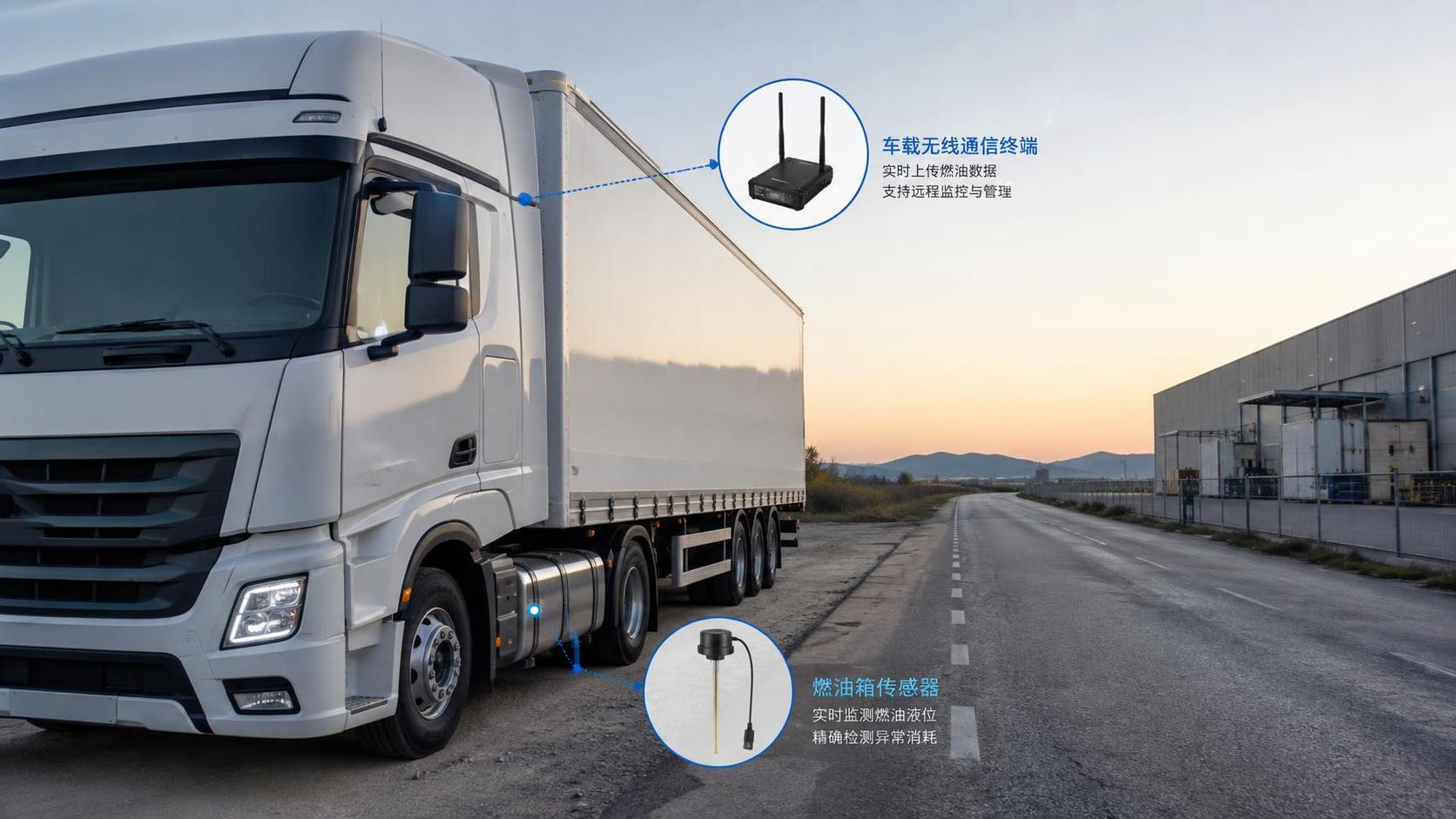
In hazardous chemical and fuel transport, visibility has both a physical and a digital dimension. The physical layer includes vehicle-mounted terminals, sensors, electronic seals, GPS smart locks, and communications equipment. The digital layer records trusted event histories, applies rules, presents alerts, and supports command decisions. This distinction is important because location alone cannot establish whether a tanker compartment, loading point, or cargo access point remained secure.
Common categories include basic fleet tracking, telematics platforms, cargo integrity monitoring, route and geofence management, fuel distribution monitoring, and emergency command systems. Buyers should define visibility according to their operational risk. A long-haul general freight fleet may prioritize ETA and utilization, while a tanker fleet may require route adherence, unauthorized opening detection, electronic sealing, custody-transfer evidence, and controlled remote unlocking.
Essential Technologies And Operating Principles
Reliable Full Fleet Visibility solutions usually use multi-constellation satellite positioning rather than depending on one navigation network. GPS, GLONASS, Galileo, and Beidou signals can improve availability under changing operating conditions. Location records are time-stamped, transmitted through available communication networks, and evaluated against planned routes, geofences, stop rules, and other operating policies defined by the fleet.
IoT sensors and intelligent control devices add the operational context that tracking cannot provide. A smart electronic lock or electronic seal can report locking state, opening attempts, tamper conditions, battery status, and authorized release events. Connected vehicle equipment can collect motion, ignition, route, and relevant sensor information. The platform converts these inputs into event records, exception alerts, and traceable activity timelines.
Cloud computing and big-data analysis support fleet-scale processing, including alarm filtering, historical route analysis, recurring risk identification, and report generation. Intelligent control supports actions such as automatic geofence-based lock or unlock rules where operationally appropriate. For hazardous environments, device selection must account for applicable explosion-proof requirements, installation conditions, communications coverage, environmental exposure, power arrangements, and defined emergency procedures.
Integrations And High-Value Use Cases
The strongest value emerges when fleet visibility is integrated with transport management, dispatch, warehouse, customer service, fuel distribution, and incident-response workflows. Integration may use APIs, scheduled data exchange, or approved data interfaces. Before connecting systems, teams should agree on vehicle identifiers, trip identifiers, event definitions, time zones, alarm ownership, and how exceptions move from the visibility platform into a documented operational response.
For tanker operations, a typical workflow begins when a vehicle is assigned a shipment and loading location. The system monitors departure, route compliance, arrival at approved zones, cargo-access activity, and delivery completion. Geofence rules can identify unauthorized route deviation or unexpected stops. Electronic seals and locks provide additional evidence for end-to-end cargo visibility and integrity, helping teams investigate exceptions instead of relying solely on manual driver reports.
HUGO Information supports these applications with tanker truck smart-monitoring systems, GPS electronic seals, smart GPS locks, IoV communication equipment, and the Eaglestar Intelligent Seal Management System for tanker truck upper and lower loading locks. Its broader hazardous-goods telematics and emergency command capabilities are relevant where operators need route alerts, remote emergency unlocking under controlled procedures, and coordinated visibility across transport, storage, and fuel logistics.
Who Should Use These Systems And How To Select Them
Full Fleet Visibility solutions are suitable for chemical producers, carriers, fuel distributors, energy companies, third-party logistics providers, warehouse operators, and organizations responsible for emergency coordination. The most appropriate buyer is not always the transport department alone. Safety, security, IT, operations, compliance, procurement, and finance usually have different requirements, so selection should begin with a shared list of critical journeys, assets, risks, and decision points.
Evaluate coverage by asking which events must be visible, how quickly they must be reported, and what proof is needed after an incident. Review positioning performance, communication options, device durability, battery maintenance, tamper resistance, installation constraints, offline-data handling, alarm configuration, user permissions, audit logs, multilingual support, and reporting. Confirm that the system can scale from a pilot fleet to regional or cross-border operations without creating isolated data silos.
Supplier assessment should include engineering capability, hardware and software ownership, implementation support, data-security practices, product documentation, warranty terms, spare-parts availability, and global service capacity. HUGO Information states that it combines independent research and development, manufacturing, system integration, and global operations. Its products have been exported to more than 30 countries, which can be relevant to buyers assessing international deployment and support expectations.
Deployment, Quality Control, And Operational Governance
A controlled deployment starts with asset and process mapping. Teams should identify vehicle types, tank configurations, cargo-access points, existing terminals, connectivity constraints, route classes, loading and unloading procedures, and emergency roles. The installation design should specify mounting positions, wiring or power arrangements, enclosure protection, seal attachment points, communication tests, and procedures for replacement or removal. Hazardous-area work must be planned according to applicable site and local safety requirements.
Quality control should verify each device identity, firmware version, location reporting, event timestamps, lock or seal response, alarm delivery, and platform data association before release. A pilot should test realistic conditions including weak network coverage, long parking periods, route deviation, authorized opening, attempted tampering, and emergency escalation. Acceptance criteria need to be measurable and linked to actual workflows, rather than limited to confirming that a device appears online.
Governance keeps the system useful after installation. Assign alarm owners, escalation windows, access roles, and data-retention rules. Train dispatchers, field operators, maintenance personnel, and supervisors on what each alarm means and which action is permitted. Review device health, battery status, communication quality, false-alert patterns, and rule effectiveness at scheduled intervals. Update geofences and route policies as operating networks, customer sites, or regulatory expectations change.
Total Cost Of Ownership And Future Direction
The total cost of ownership for Full Fleet Visibility solutions includes hardware, installation, connectivity, software subscriptions, integration, training, maintenance, replacements, and internal alarm-response labor. Cost also depends on fleet size, operating territories, desired data frequency, sensor count, hazardous-area requirements, custom reporting, and the complexity of linking transport and warehouse processes. Buyers should compare multiyear operating costs, not just initial device prices.
ROI should be evaluated against measurable operational outcomes: reduced unauthorized fuel transfers, fewer cargo-security investigations, lower fuel shrinkage, faster exception response, improved route compliance, fewer manual status calls, better utilization of dispatch time, and stronger evidence for internal audits. Establish a baseline before deployment, then track a limited set of agreed indicators by route, fleet segment, and incident type. Avoid assigning savings to the platform without operational evidence.
The market is moving toward richer sensor data, automated exception workflows, integrated safety command platforms, and more connected custody processes. As fleets digitize, interoperability, cybersecurity, data quality, and human response discipline will remain as important as device capability. A phased approach is often effective: start with the highest-risk journeys, validate the operating model, integrate necessary systems, and expand when the organization can consistently act on the visibility data it receives.
 Can full fleet visibility reduce unauthorized fuel transfers?Full Fleet Visibility solutions help detect unauthorized fuel transfers by connecting fuel changes with routes, engine status, and location. Learn how to reduce risk.
 What Full Fleet Visibility Requires Beyond GPS Location TrackingFull Fleet Visibility solutions go beyond GPS tracking with IoT data, resilient connectivity, actionable alerts, analytics, and secure integration for smarter fleet operations.
 When full fleet visibility helps prevent missed delivery exceptionsFull Fleet Visibility solutions help teams detect delivery exceptions early, protect critical schedules, and turn real-time fleet data into fast, actionable responses.



First class quality service and professional after-sales team.
In order to provide you the suitable machine , pls offer below message for us
Get in Touch
We respect your confidentiality and all information are protected.